In 3 points:
1.- NASA's two ESPACADE vehicles completed flybys of Earth on November 7 and 9, 2026, using Earth's gravity plus an engine burn to launch towards Mars.
2.- They are the first to use this "slingshot" maneuver with an engine running towards the red planet.
3.- They will arrive on Mars in September 2027 to study how the solar wind erodes the Martian atmosphere.
Maneuvers at 1,000 and 650 miles altitude
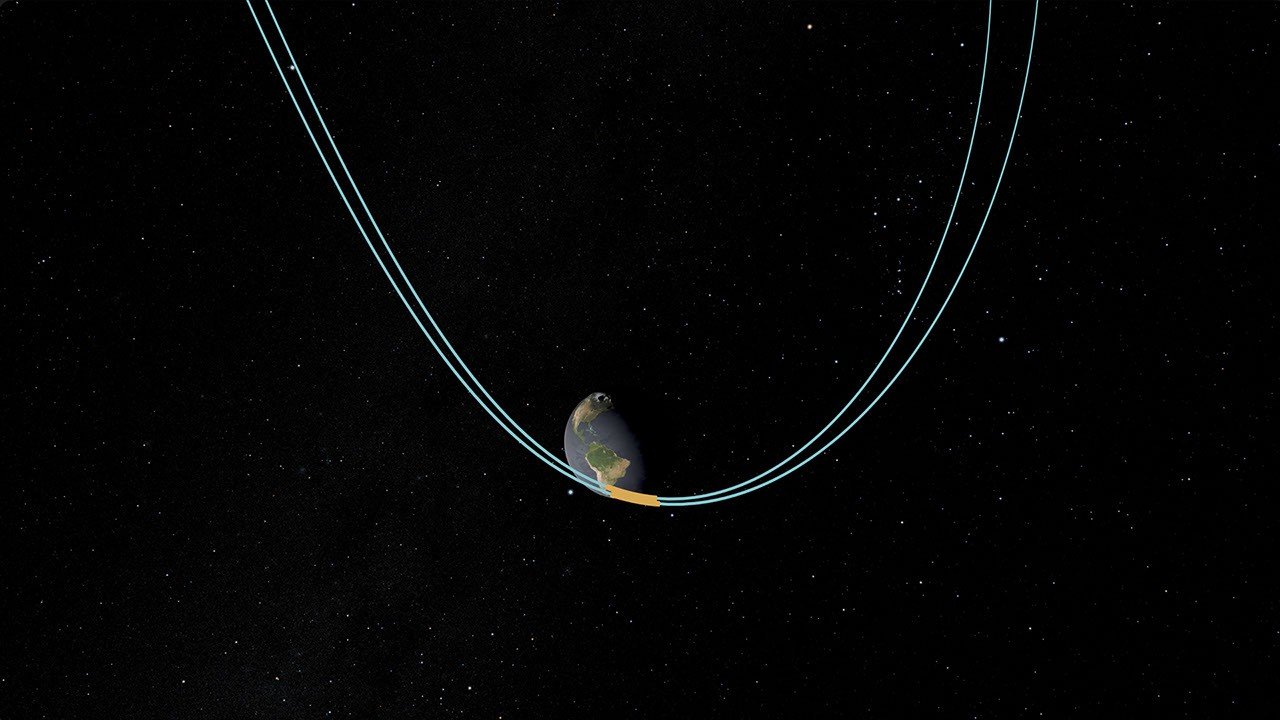
The first rover completed its close approach and roughly 9-minute burn — the Mars injection — at 5 a.m. EST on Nov. 7, about 1,000 miles above the surface. The second did so two days later, at 6 a.m. EST on Nov. 9, at about 650 miles.
"It's the first time NASA has used a powered Earth flyby to propel a spacecraft toward Mars, and we've executed it twice, flawlessly, in just two days," said Asal Naseri, associate flight director for NASA's Heliophysics Division.
You may also likeRobot assembles structure in orbit for the first time without astronautsA pioneering strategy
Both spacecraft first entered a "waiting" orbit near a Lagrange point a million miles from Earth, charting a kidney-shaped trajectory before returning for the gravitational catapult. Advanced Space's Jeff Parker and the mission's lead designer explains that this method gives flexibility to launch at almost any time and use Earth's gravity as a boost, rather than waiting every two years for the planets to be aligned.
The spacecraft are now en route for a 10-month cruise, with insertion into Martian orbit scheduled for September 7 and 9, 2027. Once in orbit, they will fly in formation to study how the solar wind — a million miles per hour of material from the Sun — interacts with the Martian environment and causes the loss of atmosphere.
Your goal
Monitor the orbit insertion of Mars in September 2027 and the start of science operations scheduled for June 2028, when the two spacecraft will begin sending coordinated data on the solar wind and the Martian atmosphere.
Sources:
You may also likeRobot assembles structure in orbit for the first time without astronautsImage: NASA Science.