Six AI models from four leading Chinese labs were trained on Nvidia Blackwell chips banned for export to China.
Forensic analysis by Will DePue, a former OpenAI researcher, tracks the fingerprints of these chips in the published weights of DeepSeek, Moonshot, MiniMax, and Ant Group.
You may also likeDemocrats push to scrutinize Trump's AI policyThe discovery coincides with Jensen Huang's departure from Nvidia this week, after admitting a relationship with Alice Huang, an executive at Megaspeed, a company involved in chip trafficking to China.
The Analysis: Weights That Reveal Hardware
Will DePue, who leads the nonprofit Unemployment Labs, analyzed the weights—the unique internal structure—of large language models openly released by DeepSeek, Moonshot AI, MiniMax, and Ant Group. The weights preserve traces of the configuration of the chips used in their training, and DePue found compelling evidence that the most closely watched models, including Moonshot's K3 and DeepSeek's V4s, carry training fingerprints on Blackwell chips.
According to the analysis, four of the six models (DeepSeek-V4-Flash, DeepSeek-V4-Pro, Kimi K3, Kimi K3.1-Pro) match GB200 or GB300 Grace Blackwell systems, and two (MiniMax-M3 and Ling-3.1-flash from Ant Group) with B200 or B300 chips.
You may also likeElvis Presley and Eminem Headlines Sue Suno Over AI-Generated MusicExport controls are not working as expected
Blackwell chips are banned for export to China or Chinese companies. The Trump administration allows Nvidia to export the H200, a less potent chip, as long as it follows an indirect shipping route that allows the U.S. to claim a 25% tariff. However, Epoch AI estimates that about two million advanced chips entered China in 2024 and 2025 through schemes designed to hide their final destination, and 275,000 Nvidia accelerators were imported into Malaysia in that same period.
Michael Kratsios, a White House technology adviser, said earlier this year that Moonshot had used banned Nvidia chips to export, citing U.S. intelligence sources. In July, he mentioned that Moonshot had accessed GB300 systems in Thailand, likely to train its AI models.
The context: Jensen Huang's departure
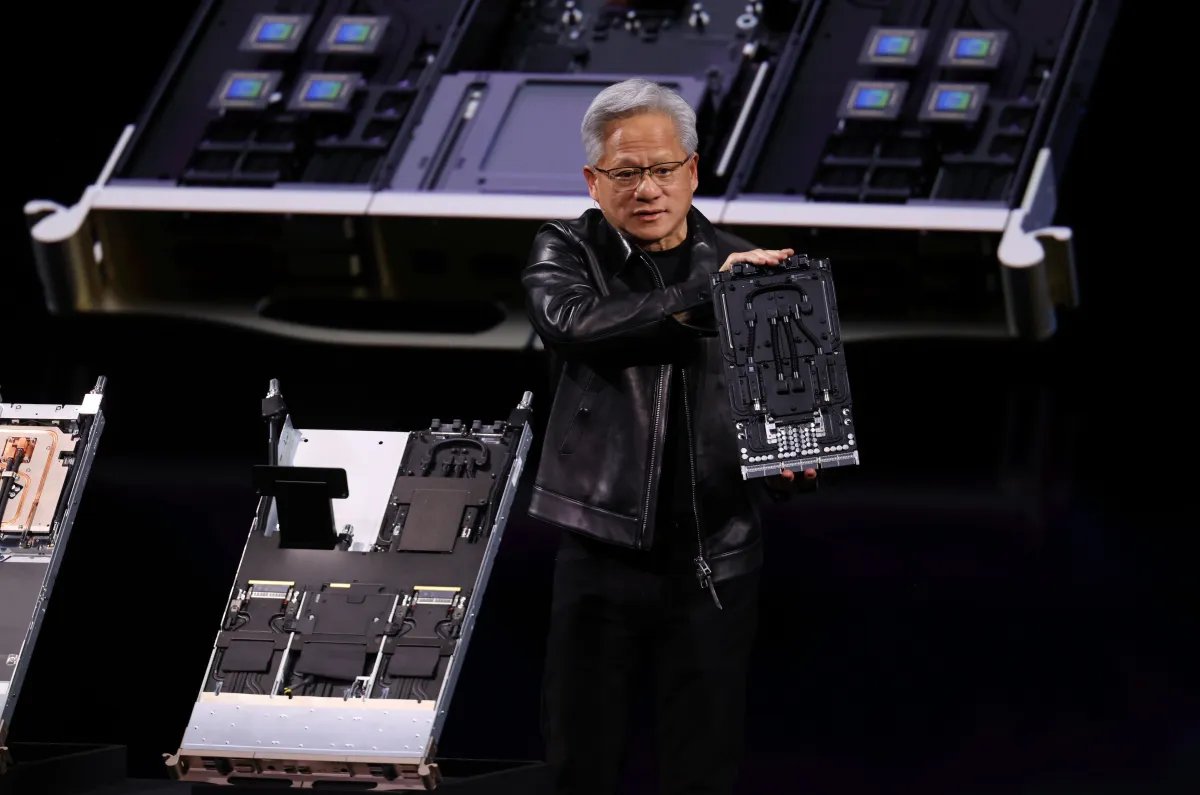
You may also likeElvis Presley and Eminem Headlines Sue Suno Over AI-Generated MusicThe discovery comes at a critical time for Nvidia. Its CEO, Jensen Huang, left the company this week after admitting a relationship with Alice Huang, an executive at Megaspeed, a company involved in Nvidia's chip trafficking to China. Alice Huang has also been pointed out as a possible agent of China's intelligence service.
While Huang's relationships with a client and two employees have garnered public interest, Nvidia's potential corporate liability for export control violations likely influenced the company's decision to part ways with Huang.
Own Angle: What It Means for Mexico and Latam
For the region, this case illustrates why export controls on AI chips are difficult to enforce in a world of cloud data centers and overseas compute rentals. Research centers in Mexico and Latin America that rely on Nvidia hardware should keep a close eye on any changes to access rules, given that U.S. restrictions may affect the availability and cost of AI infrastructure in the region.
You may also likeElvis Presley and Eminem Headlines Sue Suno Over AI-Generated MusicWhat's next
Keep an eye on the response of Nvidia, DeepSeek, Moonshot, MiniMax, and Ant Group to DePue's analysis, as well as any actions by the U.S. Department of Commerce on how Chinese AI firms access Nvidia chips overseas.
Sources:
You may also likeElvis Presley and Eminem Headlines Sue Suno Over AI-Generated MusicImage: TechCrunch.
You may also likeElvis Presley and Eminem Headlines Sue Suno Over AI-Generated Music