We talk about bases on the Moon and trips to Mars, but we need to answer whether we can have healthy children in space. Microgravity, cosmic radiation and altered body rhythms threaten hormones, fertility, pregnancy and embryonic development: the challenge goes far beyond keeping astronauts alive.
The harshest data is recent: female rats after 42 days in orbit (Rodent Research 20 mission) became pregnant with a slight drop in fertility, but their F1 daughters showed lower ovarian reserve and premature ovarian failure, and even the F2 granddaughters inherited metabolic and reproductive alterations. Transgenerational germline effect, according to PNAS (Jul-2026).
You may also likeBepiColombo ya orbita Mercurio: un fallo de software acortó la maniobra, pero la misión sigue en pieChina, meanwhile, launched the first human "artificial embryos" into space in May: aggregates of stem cells (Tianzhou-10, Tiangong station) that model 14-21 days post-fertilization without being able to reach the fetus. Five days growing, then frozen and back for analysis, as reported by Live Science.
The review is nuanced: two-cell mouse embryos arrived at blastocyst on the ISS at a rate comparable to 1g, and lyophilized sperm 9 months in orbit fertilized normally. But microgravity disorients sperm, lowers live births in simulated models, and accelerates stem cell aging, according to the Frontiers review (Aug-2026).
No one has tried to fertilize humans in orbit — no pregnant woman has ever flown, because of NASA policy and risk — and late pregnancy seems more stable than conception. Getting pregnant will be easier than gestating healthy.
Scientists are already exploring what is necessary for us not only to survive outside, but also to give birth to healthy generations there: shielded gametes, partial uteruses, artificial gravity. The self-sustaining colony begins in the cradle, not in the greenhouse.
You may also likeHera muestra el cráter gigante que DART dejó en Dimorphos y confirma que desviar un asteroide es posibleThe reviewers' conclusion is sober: mammalian reproduction in space is partially possible, but a healthy human pregnancy there would be substantially more difficult than fertilization alone. First the Moon with robots; children, later.
Sources
PNAS: Transgenerational Reproductive Dysfunction After Spaceflight
Live Science: China sends artificial embryos into space
Frontiers: Past, Present, and Future of Space Reproduction
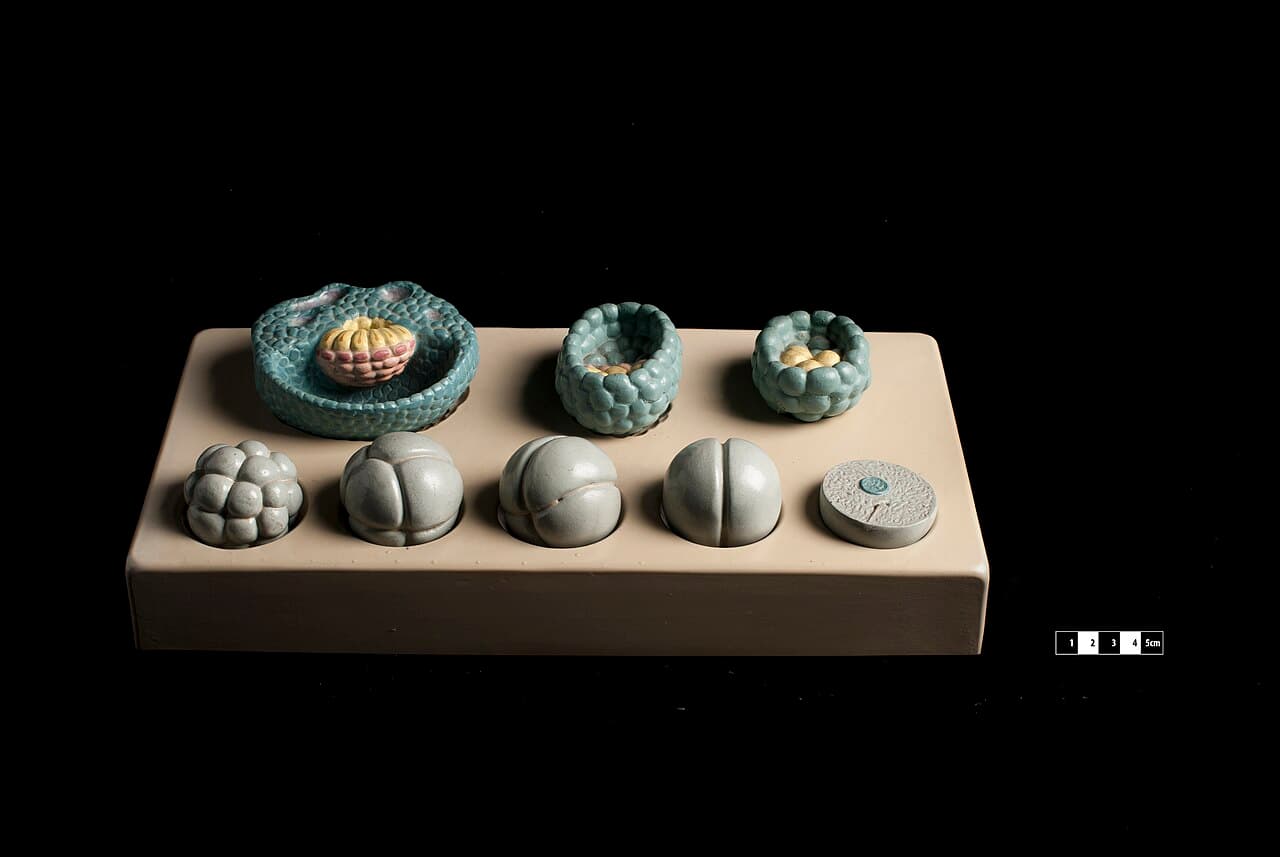
Image credit: Didactic Models of Human Embryonic Development, FMVZ USP Museum of Veterinary Anatomy / Wagner Souza e Silva, CC BY-SA 4.0 license via Wikimedia Commons.