— GR00T 2 learns by watching humans: 40% success without task-specific training, 71% with one demonstration, and 95% with five.
— The key is X-Adapt: it transfers abilities between different bodies, from a human hand to a five-fingered robotic hand.
— The nuance: The weights and code arrive in December, and an independent assessment measured 12.8% in the real world versus 95% announced.
— The key is X-Adapt: it transfers abilities between different bodies, from a human hand to a five-fingered robotic hand.
— The nuance: The weights and code arrive in December, and an independent assessment measured 12.8% in the real world versus 95% announced.
NVIDIA unveiled GR00T 2 at the Robot Learning Conference (CoRL) in Austin, Texas, a foundational model for robots that learns to manipulate objects by watching first-person videos of humans, rather than relying on each robot to practice the task over and over again. It's what the company calls a world-action model: It predicts both the next frames of video and the robot's movements, so it "imagines" how the physical interaction plays out and then executes the actions it imagined, according to Interesting Engineering.
You may also likeChina's Light Cavalry Solar Drone Completes First Flight with 30 Hours of AutonomyThe numbers NVIDIA put on the table are these: in 50 tasks that the robot had never practiced, the model completed at least once 40 of them without any specific demonstrations, with 40% average success. With a single demo per task, the average rose to 71%, and with five demos it reached 95%, with 37 tasks solved in all attempts. Fine-tuning for those five demos takes 30 minutes on a single RTX 5090 graphics card and less than three minutes of robot data per task.
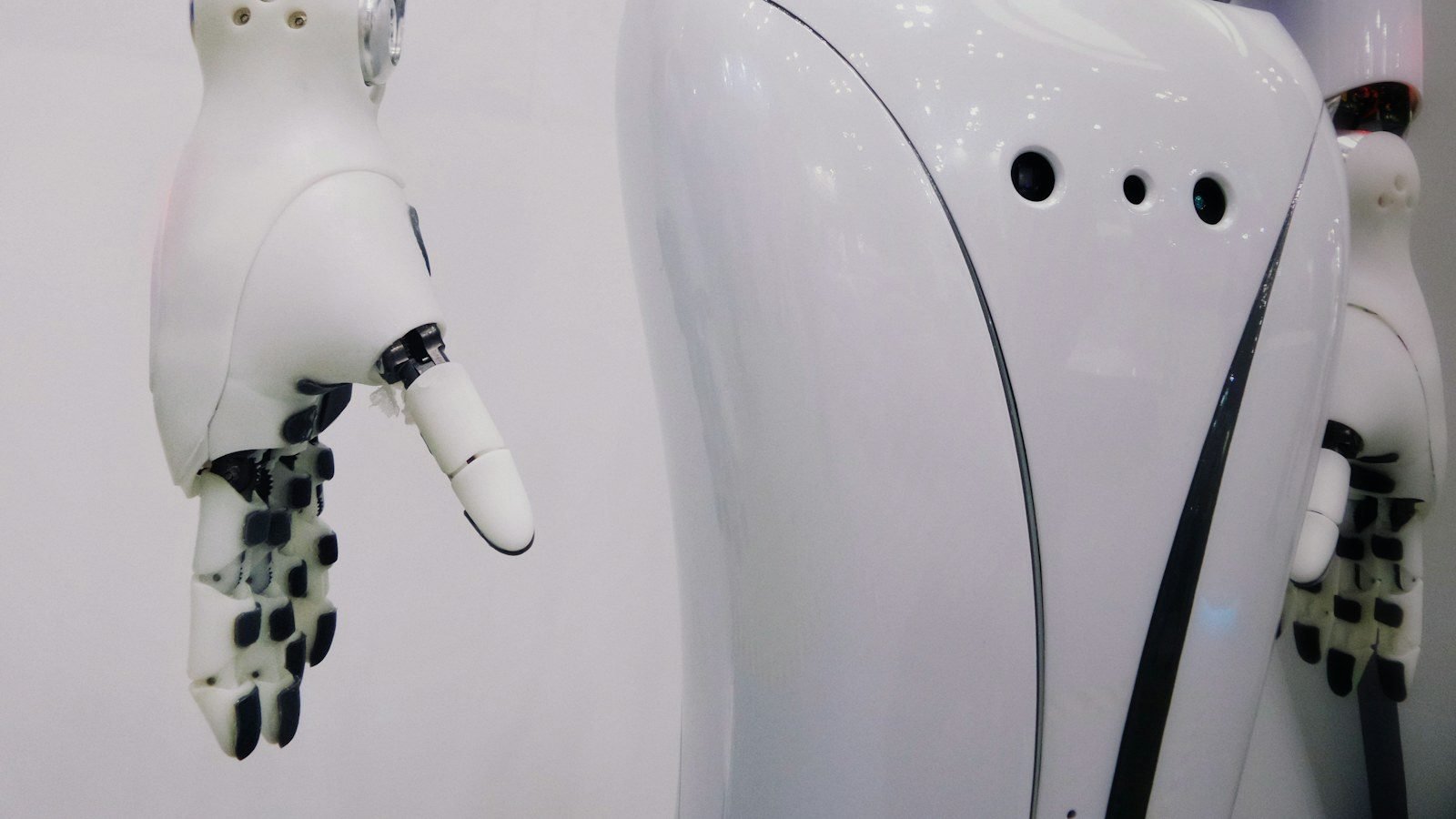
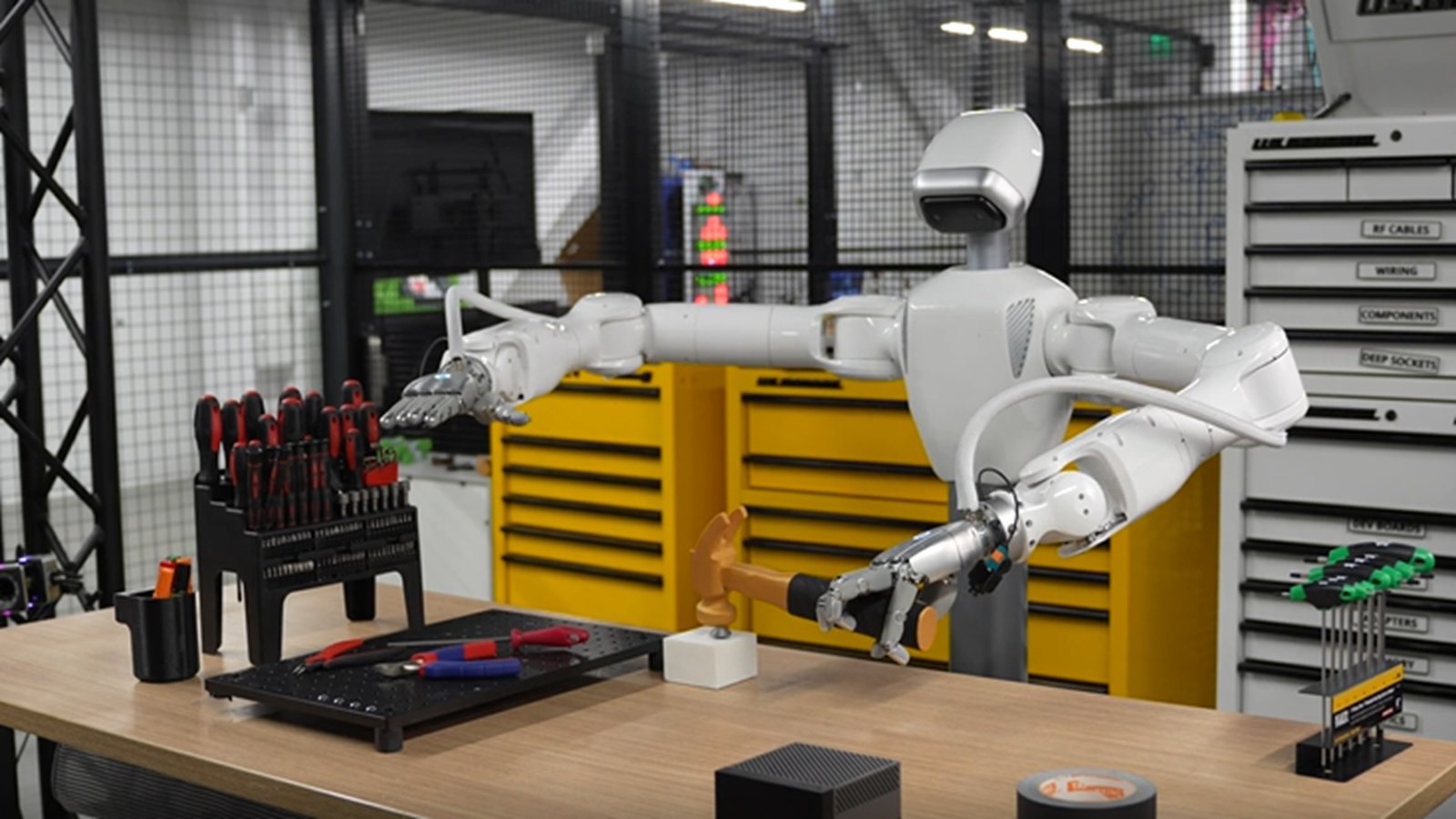
The piece that sets GR00T 2 apart is X-Adapt, the transfer between bodies: the robot learns from demonstrations made with a different body or device than its own. In one experiment, only one human—without teleoperating the robot—showed how to line a laboratory funnel with filter paper and wet it with a piseta; the five-fingered robotic hand completed the task in 65% of attempts. In another, a manual gripper (UMI) demonstrated how to assemble a toy truck, and a different arm, called YAM, assembled it in 60% of attempts without ever having received a demonstration for that task. They also used a wearable device that mirrors a person's finger movements to teach two-handed tasks, such as making banana yogurt with granola or lighting a lamp with a match.
The model was trained on an unusual scale of data: 402,730 hours of first-person human video, 10,184 hours of manual gripper demonstrations, and 23,500 hours of robot teleoperation. NVIDIA says 100,000 hours of its Human-1M dataset are openly available. GR00T 2 has 2 billion parameters and is built on top of Cosmos, NVIDIA's world modeling platform.
GR00T 2 also works with reasoning models that break down complex tasks into steps, monitor progress, and direct the robot. Across three toy assemblies, that approach completed at least 97 out of 100 attempts per toy, with the ability to recover from errors and interruptions. A visual guidance feature—the model marks where to grab and release—raised short-task success from 40 percent to 92 percent on the YAM arm. NVIDIA also introduced GR00T 2 Turbo, a lighter version that runs directly on the Unitree G1 humanoid with a Jetson Thor processor on board, with 124 milliseconds per prediction: it served popcorn on all 48 attempts and cleared a table of miscellaneous objects in 93 percent of cases.
You may also likeGoogle launches Gemini Glasses for pre-order at $395 and they work with iPhoneAlong with the model came Isaac Lab 3.0, the open-source robot learning framework, which NVIDIA says achieves up to 2.5 times the training performance of the previous version. Two industrial benchmarks, DexBench and VABAR, were also debuted, and the model ranks in the top three in the vision-language-action model and world-action model categories. "Agentic robotics is the most exciting technological development since the internet in 1995," said Ken Goldberg, a UC Berkeley robotics professor who is leading the VABAR work. Contributors to the announcement include Ambi Robotics, Bosch Research, Flexion, FieldAI, and Siemens, and industrial pilots are already underway with Foxconn, Siemens, and Nexuni.
What was promised vs. what was delivered: 95% is NVIDIA's figure in its own tests, and it should be read with the nuance that the coverage itself indicates: the tasks evaluated were pre-selected with a high base capacity, and an independent evaluation by RoboDojo measured 12.8% success in the real world compared to 95% announced, a gap that cannot be audited until December, when the weights and code are published. NVIDIA has also not yet published the terms of the license or the complete list of the 50 tasks. That said, the fundamental change does not depend on the number: showing a robot by showing it the work, instead of programming it or teleoperating it for hours, changes who can train it.
What it means for Latin America: The region doesn't compete in manufacturing humanoids, but it does compete in using them. Mexico, with its manufacturing base and nearshoring, is one of the places where an adaptable robot lands first: assembly lines, warehouses, and logistics, where each product change today requires reprogramming or retraining. If training is reduced to an operator showing the task five times with his or her hands, the cost of entry goes down for medium-sized factories, not just for large ones. And there is a point that directly touches the Latino community: the work that is taught with the body — that of the operator — becomes the data that trains the machine, so the question of who benefits from that knowledge is as important as the technology itself.
What is NOT covered: this is not a product for sale. There is no price, no marketing date, and no robot that can be purchased: it is a research model with industrial pilots, whose weights, code and training recipe arrive in December.
You may also likeGoogle launches Gemini Glasses for pre-order at $395 and they work with iPhoneWhat's next: In December, the weights of GR00T 2 and GR00T 2 Turbo will be published, along with the code and recipe for X-Adapt. That's when independent researchers can check whether 95% of it holds up outside the lab and whether the model learns just as well in real factories as it does on test benches.