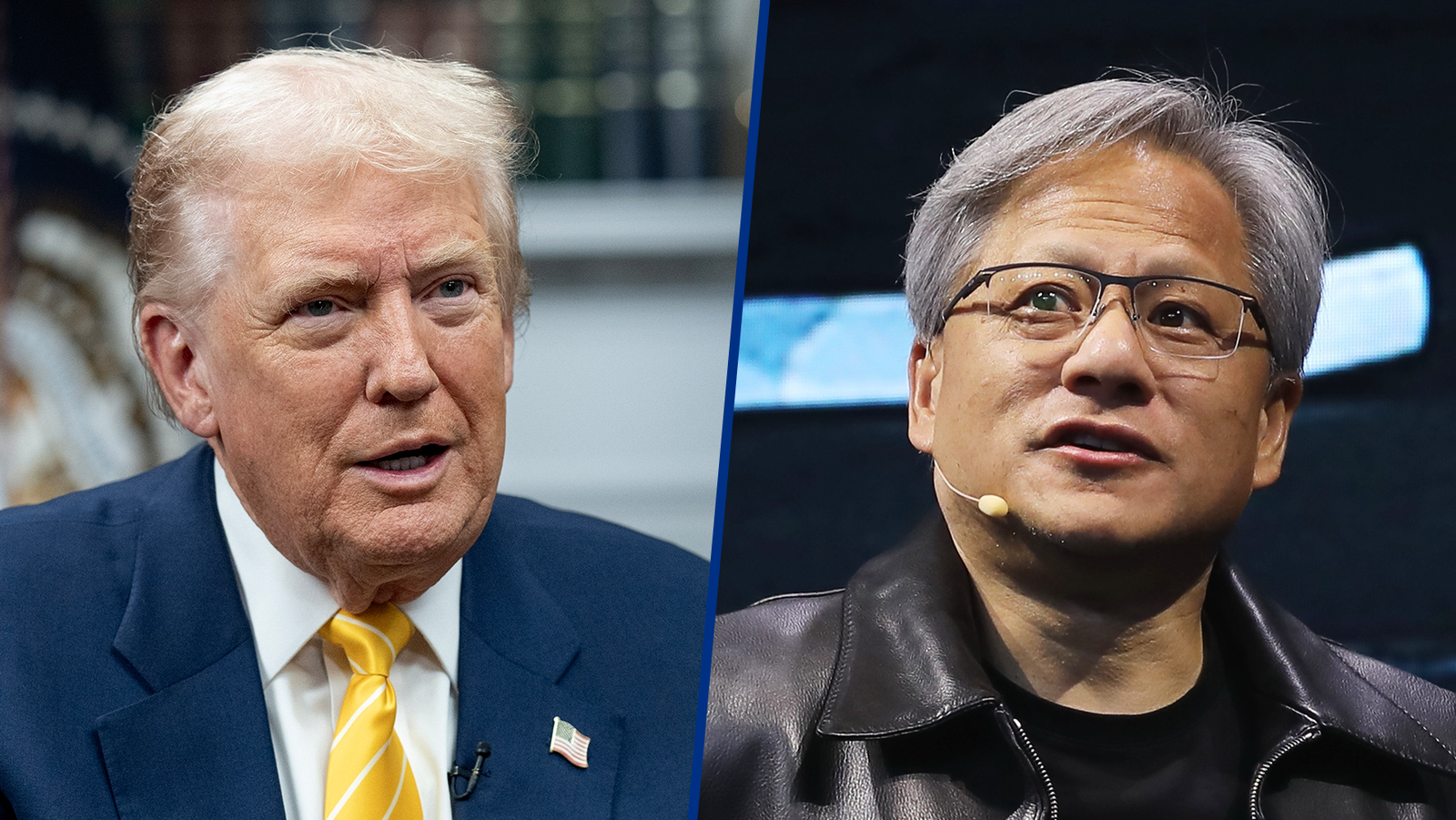
The geopolitical crossroads between Washington and the global semiconductor industry has reached a critical temperature. Exclusive reports from The New York Times confirm that President Donald Trump was briefed at least twice in a seven-month period about the affair between Jensen Huang, CEO of Nvidia, and Alice Huang, a businesswoman linked by intelligence sources to Chinese government operations.
Although the executive has publicly denied any compromise in the company's operational security, the revelation exposes the delicate balance between Western technological hegemony and Beijing's efforts to access frontier artificial intelligence infrastructure.
1. From official trips to diplomatic alerts: Marco Rubio's intervention
Warnings about this relationship transcended standard national security channels to reach the top of the White House cabinet. According to published investigations, one of the key reports was transmitted directly by Secretary of State Marco Rubio during an official trip to Beijing on the sidelines of high-level negotiations on technology restrictions.
The focus of national security advisers' concerns is on three critical fronts:
- Supply chain access: The fear that the closeness of the CEO of the dominant microchip firm ($NVDA$) will facilitate indirect avenues for the smuggling of H100 and B200 accelerators to sanctioned entities.
- Leadership Integrity: Scrutiny of whether personal conflicts of interest can condition strategic decision-making in the face of export control regulations imposed by the Department of Commerce.
- Corporate governance under suspicion: The reaction of the board of directors to reports that compromise the firm's reputation at the time of the highest market capitalization in the industry.
2. Massive internal investigation by Wachtell, Lipton, Rosen & Katz
In response to pressure from watchdogs and institutional shareholders themselves, Nvidia's board of directors commissioned a wide-ranging independent investigation into the prestigious law firm Wachtell, Lipton, Rosen & Katz.
The law firm assesses whether there were internal security breaches, unauthorized transfer of intellectual property or violations of corporate codes of ethics. The verdict of this independent analysis could determine Jensen Huang's continuity at the helm of the company or force a structural leadership change to avoid direct sanctions from the U.S. administration.
3. The geopolitical and commercial impact on Mexico and Latin America
For the tech industry and data center ecosystem in Latin America and Mexico, the crisis at Nvidia's top brass transcends the mere corporate scandal and poses serious market implications:
- Uncertainty in the semiconductor chain: An eventual readjustment or tightening of U.S. regulations in the wake of the case could delay the supply of AI hardware to data centers currently being built in the region (such as the tech hub of central Mexico).
- Greater oversight of nearshoring: U.S. authorities have increased oversight of imports of AI components to neighboring countries to prevent triangulation operations that redirect advanced microchips to China through subsidiaries or intermediaries in Latin America.
What's next in the scandal rocking Silicon Valley?
The future of the leading artificial intelligence firm will be resolved in two simultaneous scenarios:
- Resolution of Wachtell Lipton investigation: The delivery of the firm's findings to the board of directors will determine whether disciplinary action or governance changes are imposed.
- Washington's regulatory response: The possibility that the U.S. Congress or the Department of Commerce will initiate public hearings and impose new legal hurdles on Nvidia's international operations.
Sources and credits: Text adapted and written by Digitalia's editorial team based on exclusive journalistic investigations by The New York Times (Trump, China Trip, Nvidia) and the internal investigation report in The New York Times (NYT, Nvidia, probe).