A Jovian world just 7.5 light-years away has weather: Using the James Webb, the team at Brittany Miles (University of Arizona) looked 11 hours straight at WISE 0855 — the coldest known brown dwarf — taking a spectrum every 15 minutes. Result: the first direct confirmation of water clouds getting thicker and thinner over time outside the solar system.
WISE 0855 is close to 265 Kelvin (colder than the Earth's surface), has twice the mass of Jupiter in the same size and floats freely: a giant planet without a star. Its atmosphere mixes two processes at the same time – high clouds of water that grow and thin with rotation and deep gases that rise by convection – that old photometry confused into a single number. Webb separates them, details the University of Arizona.
You may also likeCOP31: el mundo pierde la batalla contra el petróleo"It's the first time we've confirmed that water clouds get thinner and thicker on a nearby world," Miles says. His colleague Mark Marley's analogy: looking through a screen door —filtered photons tell what's on either side, but you have to understand the mesh. And the mesh changes: as you rotate, patches with different cloud cover and temperature parade, like a slow-spinning patchwork.
The milestone redefines the atmospheric characterization of exoplanets: the global average is no longer enough; we have to map climate, not just chemistry. And it adds a spring of clouds: in April, Max Planck found indications of water ice clouds in Epsilon Indi Ab with the same telescope, as the MPIA recalls.
What follows is to point to smaller worlds: if Webb reads the weather forecast of a brown dwarf 7.5 light-years away, the atmosphere of a temperate rocky exoplanet is no longer science fiction. First forecast away from home: partly cloudy, with variable thicknesses.
The study is published in The Astrophysical Journal. Whether or not it rains up there is already a problem for the models – which, theorists admit, will have to be rewritten to include clouds.
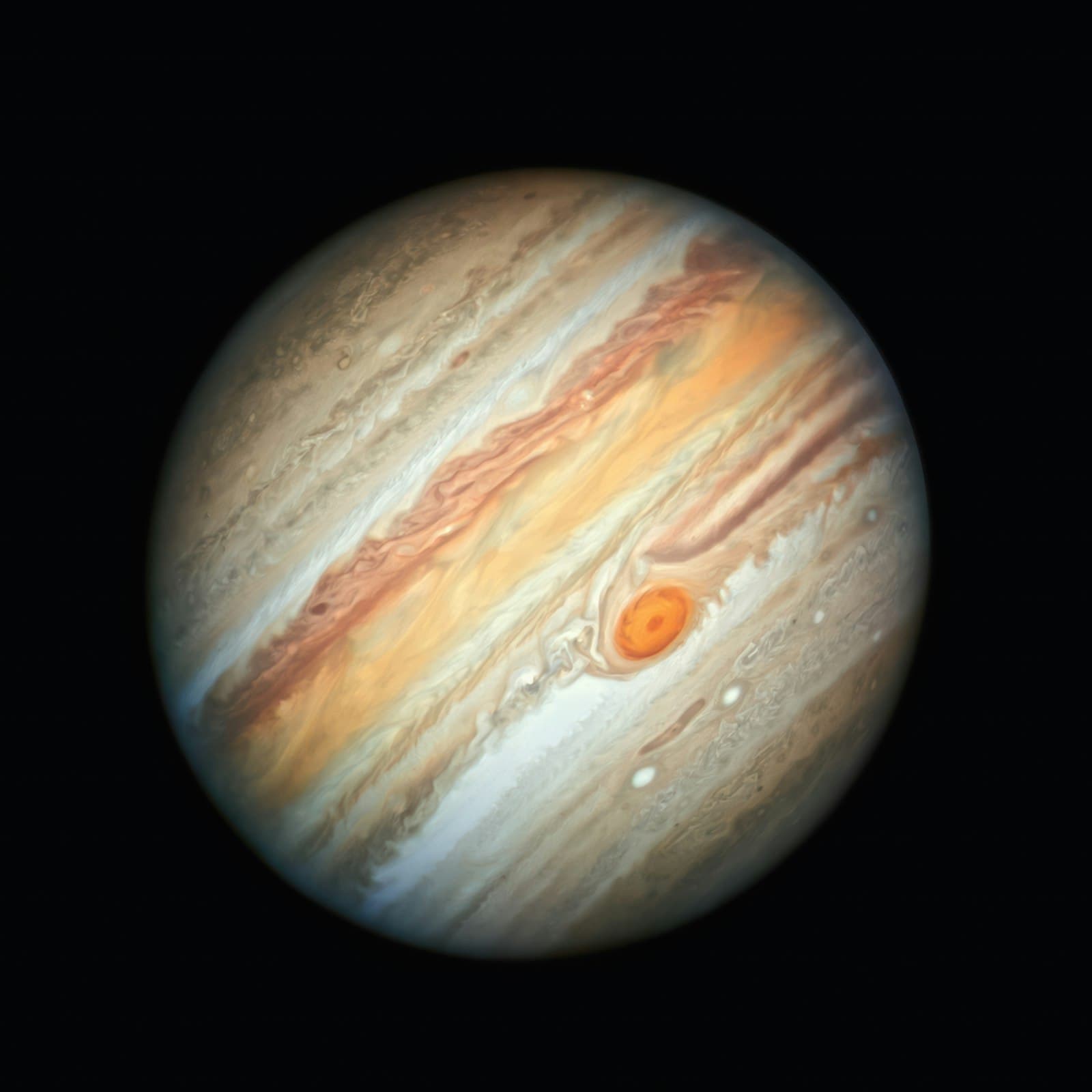
You may also likeUn paciente de Neuralink ya juega GTA VI solo con su implante cerebralImage credit: Giant Planet, Hubble/NASA Telescope via Unsplash (Unsplash license; illustrative image).