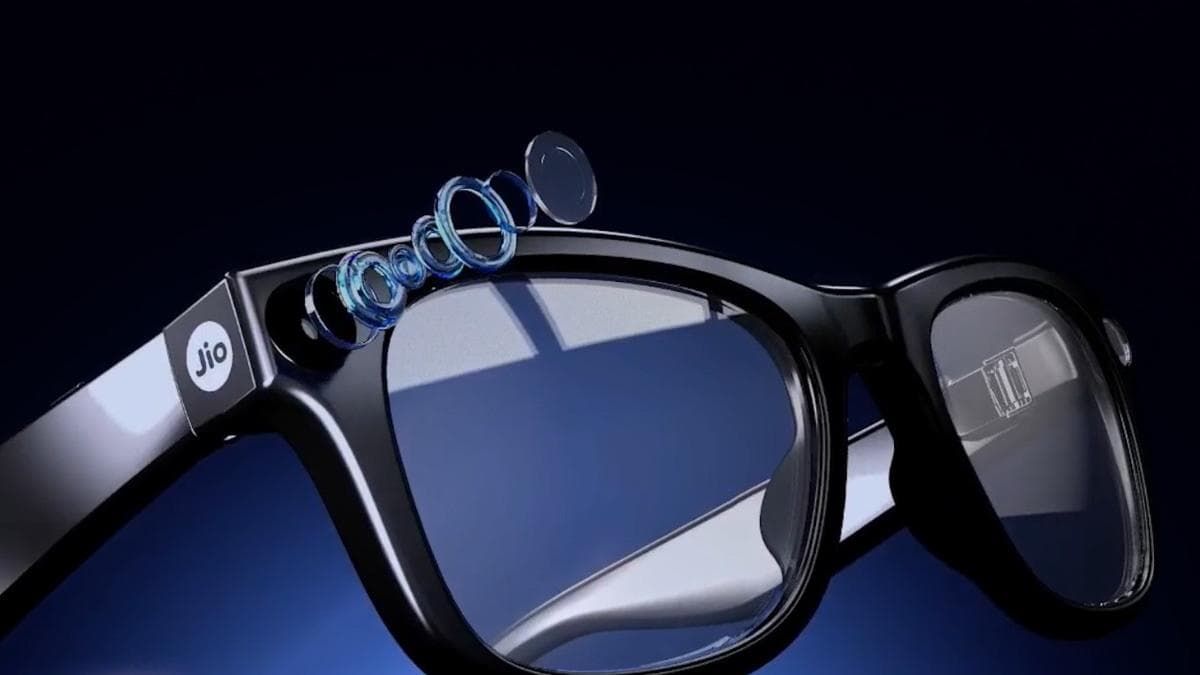
Jio unveiled AI glasses that pay for you at India Mobile Congress 2026: you look at a QR, give the command by voice, and confirm. The Jio AI Glasses scan UPI codes with their camera and execute payment by voice command, without taking the phone out of your pocket, according to Deccan Herald.
The limits are set by UPI Circle, not Jio: 5,000 rupees per transaction and 15,000 per month. Jio stresses this to clear up doubts: the company provides the hardware and the assistant; the rules of money are set by the Indian payment system.
You may also likeHuawei presenta el Mate X8, su plegable sin pliegue visible, y el Sense G1, su primer medidor continuo de glucosaThe demo in New Delhi showed the complete flow: the camera reads the QR of the business, the user asks for payment by voice, the system asks for confirmation and validates the UPI credentials. Jio does not yet detail in-depth authentication, safeguards or whether the payment is a launched service or a demonstration, a nuance that Mathrubhumi English picks up.
The package goes beyond payment: live translation between languages, AI note-taking, live sports commentary and Indian language voice support. Three formats – camera glasses, audio glasses and headphones – so that the mobile phone stays in your pocket.
The move is typically Jio: convert infrastructure (UPI is used by half of India on a daily basis) into hardware that makes it invisible. If the price is right, the glasses can do for payments what Jio did for data in 2016.
The serious questions remain: what does the camera see besides the QR? Where is the voice processed? Who responds if a voice payment goes wrong? Without answers, hands-free is also the eyes of others.
You may also likeApple allows any app to connect to Siri AI for booking and orderingThe calendar is the IMC 2026 in New Delhi, where Jio also promised commercial 6G between 2029 and 2030 at 100 Gbps. Glasses today, 6G tomorrow: the plan is to dress the user from end to end before Apple or Meta locate their move.
Sources
Deccan Herald: Jio shows off its AI glasses with UPI payments at IMC 2026
Mathrubhumi: Jio glasses scan QR and translate live
Image credit: Jio AI glasses, press image via Mathrubhumi.