In China, AI already writes up to 90% of the code in the tech giants: Alibaba and Tencent generate most of their software with artificial intelligence, in the midst of massive replacement of human programmers. The data, which circulates this week on the blog ElHacker, is partially supported by the companies' own figures – and an important nuance.
The official numbers: Tencent's 2025 R&D report acknowledges that 50% of new code is already generated by AI, that more than 90% of its engineers use CodeBuddy daily, that programming time dropped 40%, and R+D efficiency rose by more than 20%—with 325 million lines per month and AI present in 94% of revisions. At Alibaba, its chairman Cai Chongxin speaks of 30%. And in June, Vice President Tang Daosheng said that "most of this year's code" is generated by AI.
You may also likeManifiesto de París: más de cien intelectuales acusan a la oligarquía internacional de amenazar las democraciasThe nuance: "90%" mixes up metrics—90% of engineers using AI on a daily basis is not 90% of the code written by AI. But the direction brooks no argument: AI went from auto-completion to large-scale production stage, with architectures where the human defines, the AI writes, and the system verifies.
And the human cost is already being taken. Fei Zhaojun, a programmer in Beijing: his boss asked him if AI would replace programmers; two weeks later he was fired along with 160 colleagues. "Mid-level programmers are essentially replaceable in most cases," he says today. According to the OECD, Chinese big tech cut 130,000 jobs in 18 months, and 47.5% of industrial companies already use models and agents (9.6% in 2024), PBS/AP reported.
The change is structural, not cyclical: Alibaba asks entire units to suspend non-urgent projects to build agents to serve the business (the best teams absorb the weak ones in October), Tencent automates bug fixes with minimal human verification, and full-stack teams demand super-individuals to do everything. The front/back/tester/QA divide dissolves.
China is pushing from the top with the "AI Plus" initiative and its plan for 2030: to spread AI throughout the productive apparatus. Less anti-AI sentiment than in the West, more rush to reconvert. The Chinese programmer does not discuss whether AI programs: he discusses what is left for it when it is finished.
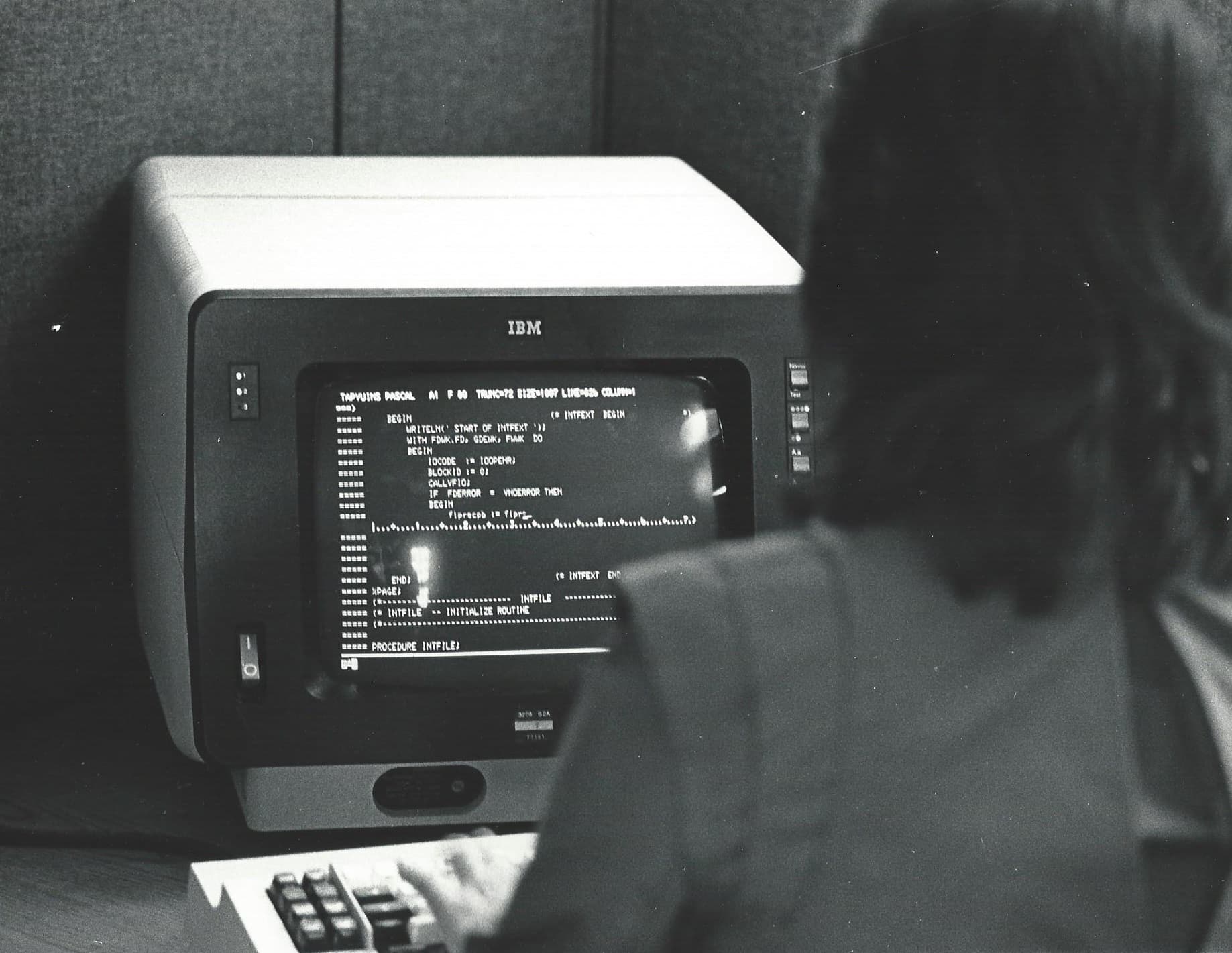
You may also likeMicrosoft's CEO says he would rent Musk's AI capacity in spaceImage credit: Terminal programmer, Jonathan Schilling via Wikimedia Commons, licensed under CC BY-SA 4.0.