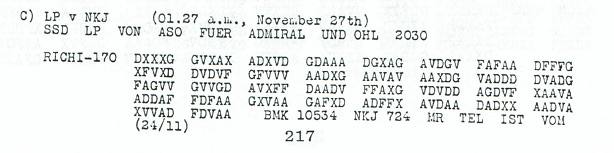
An AI has achieved what had been pending for more than a century. GPT-6 Astra, OpenAI's new model, apparently deciphered a German radio transmission from 1918 that had never been decoded before. The message, intercepted during World War I, revealed movements of British ships near Sevastopol in Crimea (Tom's Hardware).
The ciphertext, of 170 symbols and sent on November 27, 1918, used the ADFGVX cipher, which converts letters into pairs of the letters A, D, F, G, V, and X before reordering them. The development of the experiment was published by the developer known as Prinz, who proposed using the word "TRUPPENVERSCHIEBUNG" as a key and reordering it alphabetically to reverse the transposition.
You may also likeUFORCE raises $700 million to bring Ukraine-tested drones to a global industryThe message, translated into English, reads roughly: "AN ENGLISH CRUISER ARRIVED AT SEVASTOPOL ON THE 24TH. AN ALLIED SQUADRON FOLLOWS ON THE 26TH." In German: "EIN ENGLISCHER KREUZER EINLIEG X SEWASTOPOL X S4STEN X EIN GESCHWADER DER X ALLIIERTEN FOLGT 26STEN X."
What is remarkable is that Astra did not limit itself to deciphering the ciphertext: it independently contrasted the result with historical records more than a century old and verified that the British cruiser HMS Canterbury recorded its arrival in Sevastopol on November 24, 1918, followed by the arrival of an allied squadron on November 26, as the author of the find himself explains (Cybernews).
Astra even hypothesized why the message had never been resolved: previous attempts would have assumed that the code word was first used on 9 December 1918, when in fact the transmission is from around a month earlier. Even so, part of the cruiser's arrival date remains not entirely clear in the text; even so, the main details match the original logbook of HMS Canterbury.
The achievement adds to the streak of GPT-6 Astra, which days earlier also broke a 1941 Enigma code that had been unsolved for years, reinforcing the field of so-called AI cryptanalysis for unresolved historical messages (GIGAZINE).
You may also likeSynthetic DNA and Bioterrorism: The New Global Security RiskSource: Aipost (Telegram).
Sources: Tom's Hardware · Cybernews · Moneycontrol · Mezha · Korben · FounderBuilt · GIGAZINE · Linxi News · Aipost (Telegram). Image credit: Aipost (Telegram).