The managing director of the International Monetary Fund, Kristalina Georgieva, warned on October 7 in Singapore that the world economy is being dragged in two opposite directions: a negative energy supply shock from the wars in the Gulf and Ukraine, and a positive demand shock driven by investment in AI. The result, she said, is "highly uneven around the world."
Georgieva spoke on the eve of the annual meetings of the IMF and the World Bank, which start next week in Bangkok, where ministers from 191 countries will assess a landscape marked by conflict, inflation and the speed of technological change. "Some very tough political decisions are staring us in the face," she summarized.
You may also likeJensen Huang regresa como CEO de Nvidia tras intervención de TrumpOn the optimistic side, the figure he put on the table is on a historic scale: global investment in AI as a percentage of GDP will reach – and probably exceed – what went into building railways, the power grid or telecommunications. But that same bonanza is inflationary, he warned: the construction of data centers, energy and food shocks, tariffs, defense spending and high public debt push prices up.
Distributional risk is at the core of her message. AI is becoming, Georgieva said, "a key driver of the relative fate of countries" in the global economy, but it leaves behind nations without infrastructure, human capital or access to computing, widening the gap between those who can capitalize on it and those who cannot. "Love it, hate it or fear it, AI is here," she said.
On debt, she was blunt: advanced economies, led by the United States—followed by Japan and Germany—are the "worst offenders," with debt-to-GDP ratios higher than emerging markets and low-income countries, which in turn must choose between spending on social welfare or paying onerous loans at high rates.
The diagnosis closes with an uncomfortable paradox for decision-makers: the same engine that sustains global growth is also one of the sources of the imbalance. In Bangkok, the question will be whether fiscal policy keeps pace with AI.
You may also likeManifiesto de París: más de cien intelectuales acusan a la oligarquía internacional de amenazar las democraciasSources
Associated Press via NY1 · India Today · China Daily AP: "risk cocktail from AI, oil and debt" · Bernama: MFI from Singapore
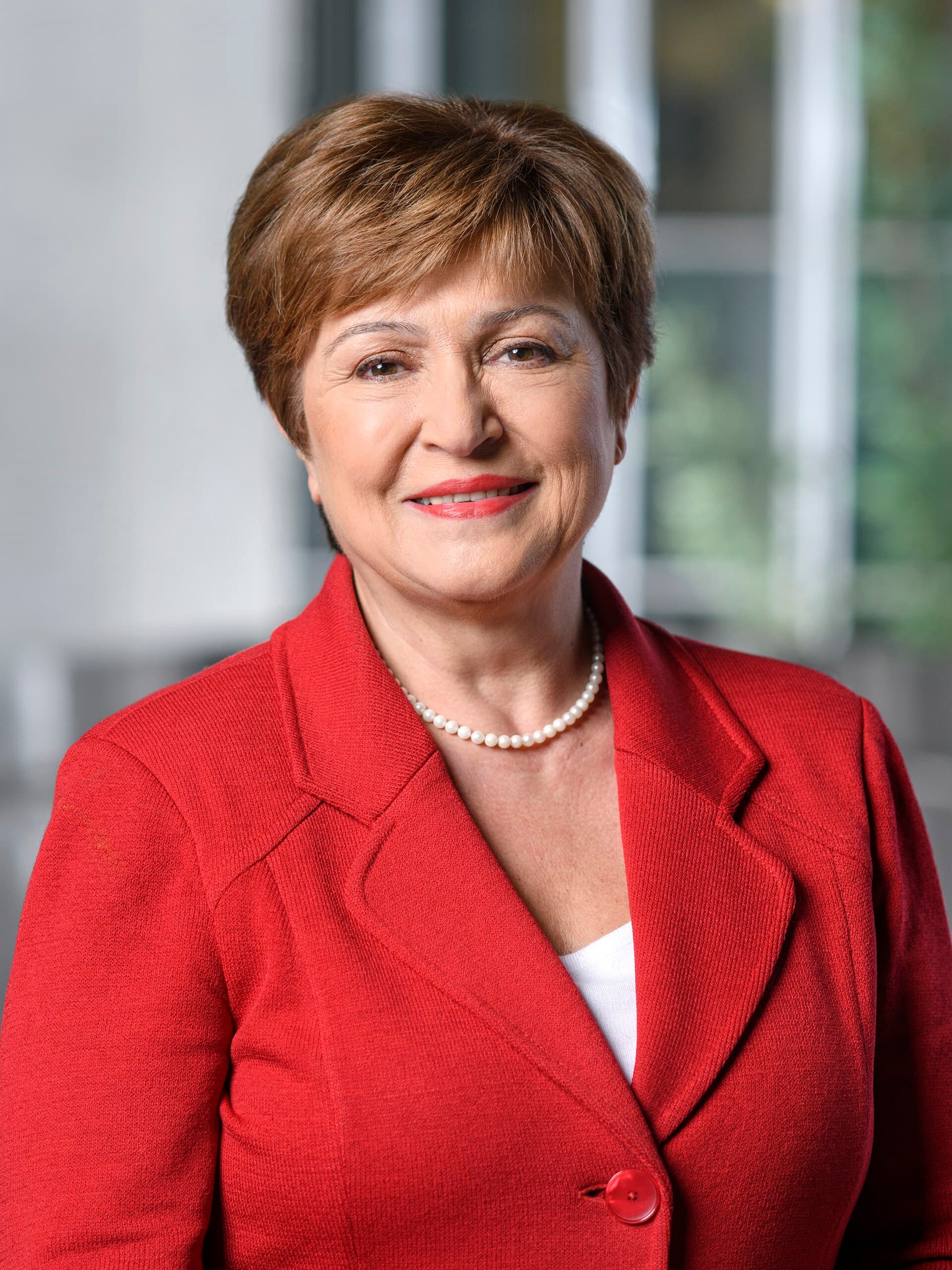
Image credit: Kristalina Georgieva, World Bank Group / Grant Ellis via Wikimedia Commons, licensed under CC BY-SA 4.0.