Danaher advances autonomous laboratory and accelerated discovery vision. Its first autonomous AI lab will operate at scale in early 2027: custom antibodies and affinity reagents, 8x faster from design to advance and 10x more reagents per year, according to Danaher Investors (Oct 7, 2026).
The recipe: AI that designs, robotics that builds and rehearses, and each result feeds back into the model for the next design. Design-make-test-learn cycle in a continuous loop, with scientists deciding the complex and machines deciding the repeatable.
You may also likeNHS prueba IA para detectar cáncer de mama en el ensayo más grande del mundoThe muscle is the ecosystem: Beckman Coulter, Cytiva, Genedata, IDT and Molecular Devices provide technologies; Abcam hosts; Automata orchestrates robots. Five companies, a single connected workflow.
The wave is sectoral ("AI for Science"): summit in Singapore strengthening safeguards, Kyoto Vision with 17 countries and Roche with its own autonomous labs. Danaher wants to lead it with intelligent instruments that produce AI-ready data, as reported by KSL/Reuters.
The promise includes sustainability: to complement the classic animal immunization for antibodies. Fewer mice, more robots; the same rigor, verified and tested in each cycle.
If Abcam's lab delivers, Danaher will scale to a fleet of intelligent instruments. The discovery will cease to be craftsmanship and will be continuous manufacturing.
You may also likeUltrasonido mapea por primera vez un riñón humano completo en 3DThe risk is the same as always in scientific automation: optimizing the measurable and forgetting the important. Danaher responds with humans in key decisions and verification in each cycle. We will see if the promise survives the first failed antibody.
Sources
Danaher Investors: Autonomous Lab with AI (Primary)
KSL/Reuters: Danaher to launch autonomous lab in 2027
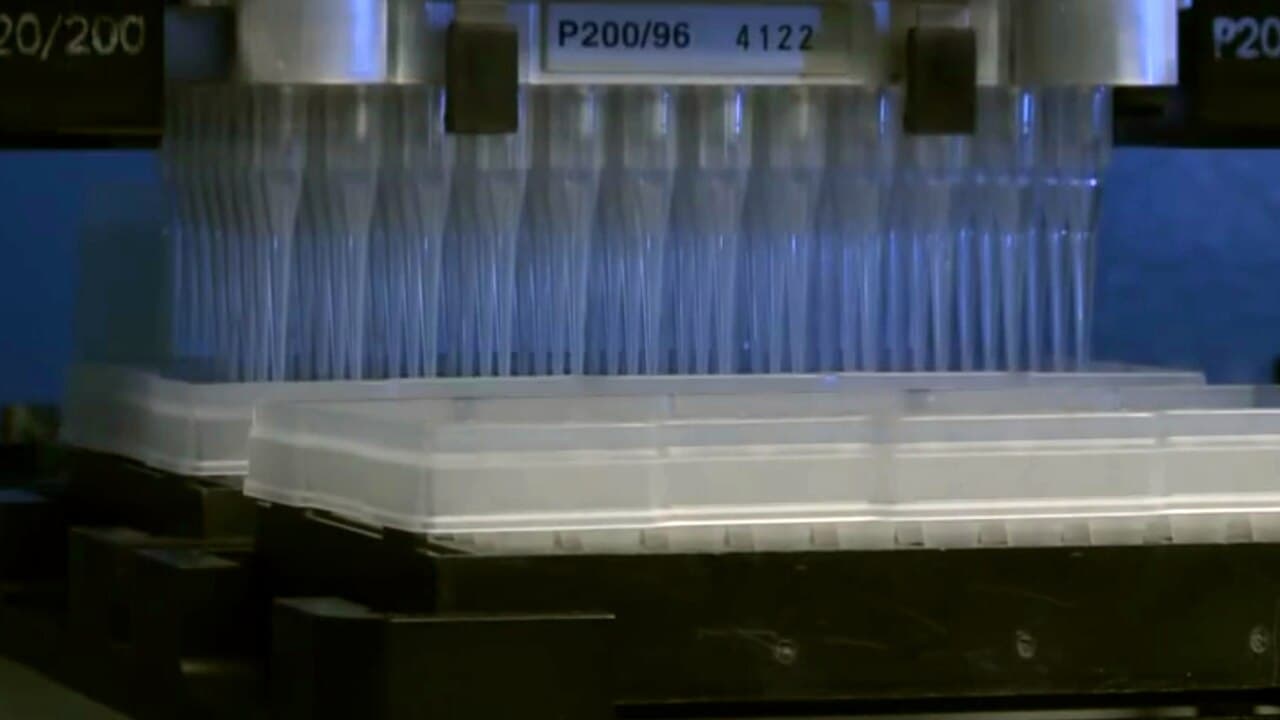
Image credit: BioMek FX pipetting robot, NIAID photo, public domain via Wikimedia Commons.